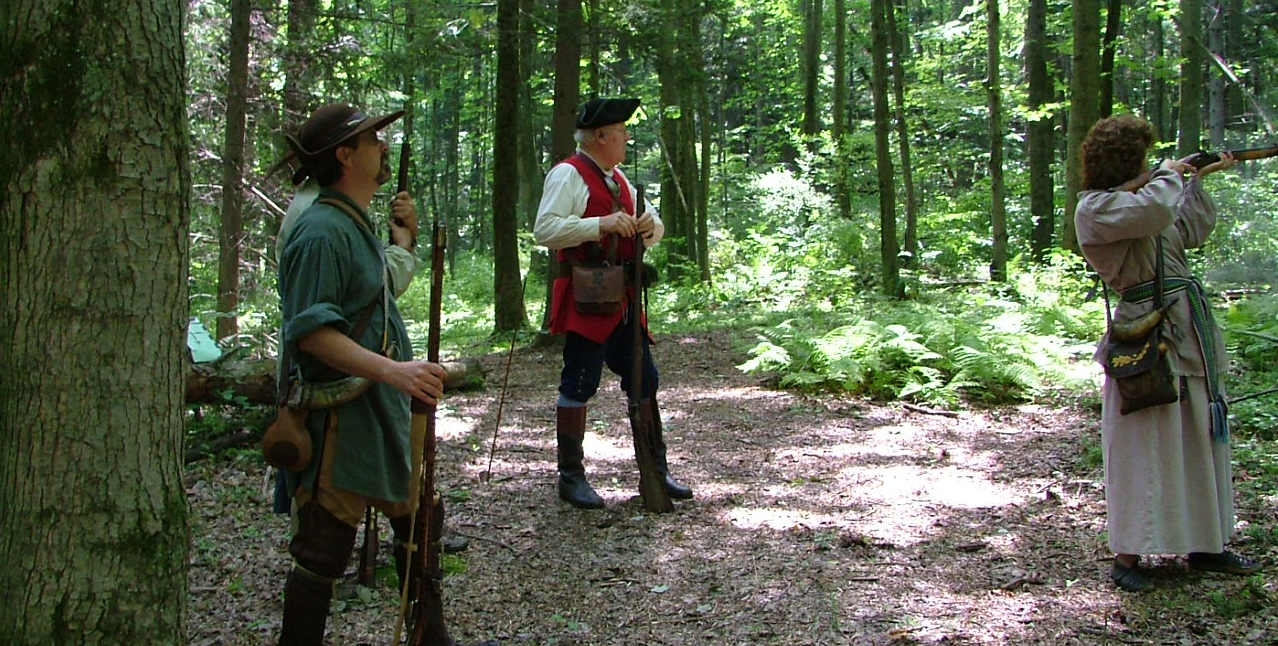


O.W.R. Collectors Show Association ( 2026 Show info below )

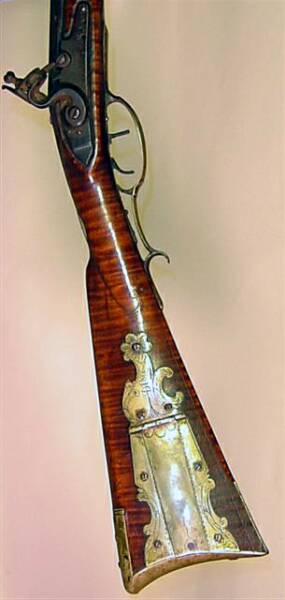
Original, Jacob Dickert Rifle Dated,1806
Welcome to the Old Westmoreland Rifles Collectors Show Association page. Our aim is to educate the public regarding the fine artistry and historical significance of the longrifle in American history.
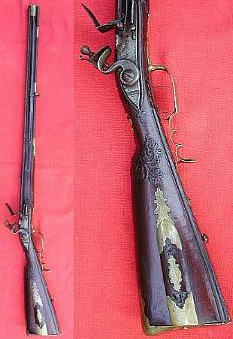
Contemporary, Jaeger Rifle
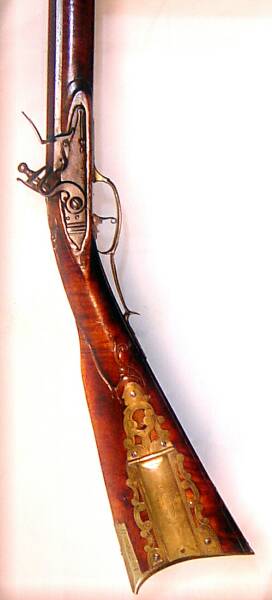
Original, Jacob Sell Rifle
The Kentucky rifle did not originate in Kentucky, its roots are of the Pennsylvania Longrifle and it existed long before the white man set foot in the Kentucky frontier.
The so-called Kentucky rifle was merely a Pennsylvania Longrifle carried by now famous frontiersmen into the Kan-tuc-kee land.
Developed in Pennsylvania by Germanic settlers who had emigrated from their homeland to the American Continent. Initially the rifle smiths made rifles similar to the Jaeger hunting rifles they had made and used in their German homeland. These were big, heavy barreled, large caliber guns with rifling cut into the bore. They were either very plain or very fancy. They usually had sliding wooden patch boxes earlyon but brass was not unheard of. They were relatively short, being about a 30"barrel length. The frontiersmen loved the accuracy of the rifle, but did not like the weight, or the balls per pound they could carry, nor the amount of powder it took to drive such balls. They asked for and received from the rifle smiths a rifle which was longer in barrel length for greater accuracy and more efficient powder burn, smaller in barrel width and caliber to reduce weight and allow more shots per pound of lead balls and powder.
This developed into what we know as the Pennsylvania Longrifle which was necessary to these frontiersmen in expanding the country's frontier. A rifle of 40 to 50 caliber, 42" to 48” long barrel, slim, carved for enhancement as were the German hunting rifles but not too fancy. They were working guns, not sporting guns. They were used for defense as well as for food gathering.
Call it what you will, as for me, it will forever be known as the Pennsylvania Longrifle, and it played a significant part in early American history.
Early Roots (1700-1750)
The Longrifle's early history is tied to Germanic settlements of Eastern Pennsylvania. The Jaeger Rifle is the Father of the American Longrifle. The Jaeger barrel had rifling grooves cut into it which improved accuracy immensely.
Key Areas of Development (1750-1780)
Christians Spring near present day Nazerath, Pennsylvania in Lehigh County, Reading in Berks County and Lancaster.
The French & Indian War (1753-1763)
Colonial Militia and Native Americans primarily used muskets. But rifles were also used by Rangers and some Indians.
The Revolutionary War (1775-1783)
Surviving rifles are rare, they were used primarily as sniper and skirmish weapons,and were consumed through hard use.
The Zenith (1790-1850) The Golden Age
Rifle making flourishes in the colonies. The patchbox, carving and inlays were evolving into a uniquely American art form and experts consider it to be America's earliest art form.
THE 28th ANNUAL “BUSHY RUN” 2026 HISTORIC ARMS SHOW INFO - See the new dates for the show
“Early Bird” opening – Friday afternoon, January 30, 2026 &
All-Day Saturday, January 31, 2026
SPONSORED BY THE
OLD WESTMORELAND RIFLES – COLLECTORS SHOW ASSOCIATION
AT
The Lamplighter Restaurant, Delmont, PA
(See the directions below)
• EXIBITOR SET-UP HOURS:
Friday, January 30, 2026 - 10:00 AM to 9:00 PM &
Saturday, January 31, 2026 – 7:30 AM to 9:00 AM
(TABLE DONATION - $70)
• PUBLIC SHOW HOURS:
“EARLY BIRD” – FRIDAY, January 30, 2026 -1:00 PM to 5:00 PM
ALL DAY SATURDAY, January 31, 2026 - 9:00 AM to 4:00 PM
(ADMISSION DONATION - $10)
• SHOW FEATURES:
HISTORIC ARMS DISPLAYS
(Kentucky rifles, accessories and associated
arms made during the period 1700-1850)
HANDCRAFTED REPRODUCTIONS
ANNUAL NEWSLETTER – (3 issues @ $15/yr.)
MODERN FACILITY, EASY PARKING, GOOD FOOD, &
8-FOOT-LONG TABLES
• SHOW RULES:
SMOKE-FREE SHOW
NO ONE UNDER 16 ADMITTED (Without adult supervision)
NO ALCOHOL
NO GUNPOWDER OR CARTRIDGE AMMO
(Muzzle loaders only)
NO PHOTOGRAPHY (Without permission)
• LOCAL LODGING:
For show rates mention “THE BUSHY RUN SHOW”
SUPER 8 MOTEL – DELMONT (724-468-4888)
Located south of the junction of the 66 Toll Way and PA Route 22.
HOLIDAY INN EXPRESS – DELMONT (724-468-1050)
Behind the LAMPLIGHTER RESTAURANT located on PA
Route 22 west of the 66 Toll Way towards Murrysville.
For more info about the show, call (724) 331-1131 or visit www.oldwestmorelandrifles.com
DIRECTIONS TO THE LAMPLIGHTER RESTAURANT
Website: TheLamplighterDelmont.com
Location: 6566 Route 22, Delmont, PA 15626
Phone: 724-468-4545
FROM POINTS EAST:
Take the Pennsylvania Turnpike (PA 76) to the Greensburg-New Stanton Interchange. Follow Route 119 to the Toll 66 North (Note: For exit the 66 Tollway, take the Delmont Cloverleaf to PA 22 west. The Lamplighter is on the William Penn Hiway (Rt. 22). The Holiday Inn Express is behind the Lamplighter.
FROM POINTS WEST:
Take the Pennsylvania Turnpike to the Pittsburgh Interchange at Monroeville. After the tollbooth, take the Route 22 East – Murrysville Exit Ramp. Follow the Route 22 East (go thru Murrysville on the William Penn Hiway) for about 10 miles. The Lamplighter Restaurant is on the left next to the Get-Go Service Station. For parking, go past the Get-Go and turn left. Then take the ramp behind the Get-Go to The Lamplighter and Holiday Inn Express.
FROM FORT LIGONIER:
Follow Route 30 West to the Toll 66 North (towards Delmont). Take Toll 66 North to the end of the tollway. Go west on the Wm. Penn Hiway (Rt. 22). The Lamplighter and Holiday Inn Express are just past the Get-Go Service Station. (Note: The 66 Toll Way will be going cash-less or E-Z PASS soon.)